

Are You Too Sick to Walk?
You’ve caught a cold, or maybe have the flu. Should you skip your regular workout? The answer depends upon your temperature, your pulse, and your common sense.
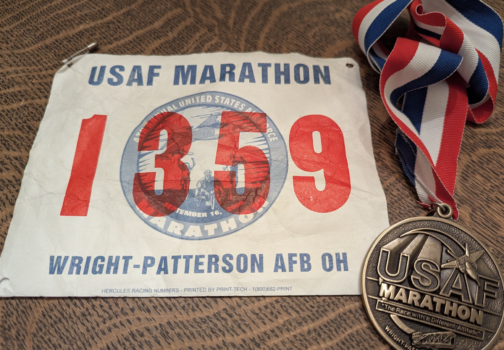
Regular moderate exercise will improve your immune system, and regular exercisers do have fewer colds than the folks who choose a sedentary lifestyle. An endurance event, however, such as a marathon, will drastically fatigue the immune system for several weeks, and many marathoners will often come down with a nasty cold the week after the event. The message here is that if you have a cold or the flu, it is not the time to do an endurance event. Chalk this recommendation up to common sense.
If you really feel achy, or are so juicy that you have some airway obstruction, it’s also common sense to skip those workouts until the acute symptoms subside, but for those of you who want more precise data than common sense upon which to base a go/no-go decision, read on.
______
For those of you who want more precise data
than common sense … read on.
______
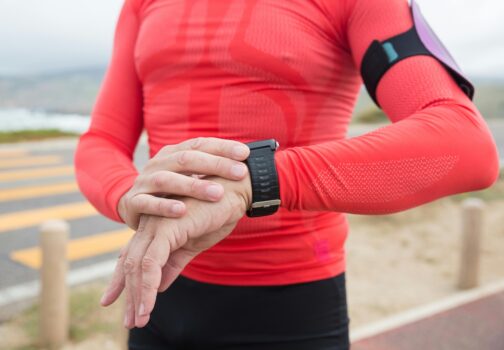
You should know your resting pulse rate, particularly the resting rate upon awakening in the morning. Keeping a record of the morning pulse rate will let you know if you are overtraining and need more rest. That same eight to 10 beat increase in pulse rate that tells you about overtraining when you are perfectly well, will tell you that your upper respiratory infection is causing enough systemic response to cancel that workout. If you ordinarily check your resting pulse rate at some other quiet time during the day, an eight to 10 beat per minute increase is still sending the message that you should not ignore. Skip your workout, and don’t feel guilty about it.
A body temperature elevation sends the same message, but what constitutes a temperature elevation? The answer is not as simple as you might think. Most of us have been taught to believe that normal body temperature is 98.6 °F, or 37 °C, but research has cast those figures into doubt. Dr. Carl R.A. Wunderlich (1815–1877) established the 98.6 average by taking more than one million axillary (arm pit) temperatures from 25,000 patients. He also realized that body temperature gradually increases during the day, with the lowest temperature being about 6:00 a.m., and the highest between 4:00 and 6:00 p.m. This variation amounts to half a Celsius degree or one degree Fahrenheit.
These figures were never really questioned until 1992, when researchers at the University of Maryland were testing a new vaccine against Shigella, a kind of bacteria that causes severe diarrhea. Their data showed the average oral temperature to be 98.2 °F (36.8 °C), and the upper limit of normal was 99.9 °F (37.7 °C). Women had slightly higher temperatures than men, and black subjects tended to have higher temps than whites. Children have higher temperatures than adults. Elderly folks have lower temperatures, and may never get up to 98.6 °F, even in the evening.
The recommendations that came out of all this testing are as follows. The upper limit of normal for an early morning temperature should be 98.9 °F (37.2 °C), and the overall upper limit for normal oral temperature for adults aged 40 and younger should be 99.9 °F (37.7 °C). If your temperature is one degree Fahrenheit (half a degree Celsius) above these upper limit of normal baselines, call off the workout.
Feeling lousy, being too juicy to breathe, having a resting pulse rate that’s eight to 10 beats faster than usual, or having a one-degree temperature elevation are all adequate reasons to cancel that workout. If you are too compulsive to accept these recommendations, you will likely pay the price in prolonged upper respiratory misery.
______________________________________
Reprinted from the Winter 2006 issue of WALK Magazine. By William E. Schamadan, MD, a retired Ob-Gyn physician who advocates and demonstrates an active lifestyle. He raced and walked three marathons and three half marathons after turning 70. He finished the Vermont City Marathon on his 75th birthday.
(136)




Comments
Excellent insights on exercise and immune system balance! As a gaming platform operator, I see similar patterns – consistent moderation enhances performance while extreme stress degrades it. Just as monitoring your resting pulse prevents overtraining, setting healthy limits maintains sustainable engagement. The jljl88 link philosophy applies: balance beats intensity every time for long-term wellness.